What is Fiber Cement Siding?
Fiber cement siding is a heavy-duty blend of cement, sand, and cellulose fibers. It is engineered to mimic the appearance of natural wood grain but is built for masonry-grade strength.
It resists fire, pests, and extreme temperatures, making it a standout “premium” option for cold climates.
What About Vinyl Siding?
Vinyl siding is made from durable PVC and is the most popular siding material in America. It is lightweight, cost-effective, and virtually maintenance-free.
While it used to have a reputation for being flimsy, modern premium vinyl is engineered to be tough, fade-resistant, and surprisingly weather-capable.
Round 1: Durability in Harsh Winters
Living in Bismarck means your exterior will face freeze-thaw cycles that can wreak havoc on lesser materials.
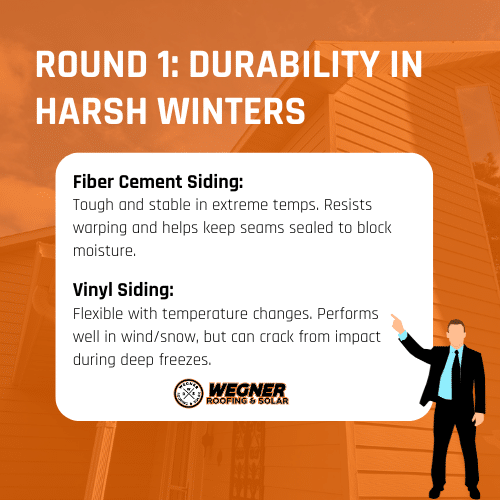
- Fiber Cement Siding: Think of this as a shield of armor for your home. It is dimensionally stable, meaning it does not expand or contract significantly when temperatures swing from -20°F to 40°F. This stability keeps your caulk lines tight and prevents moisture from sneaking in.
- Vinyl Siding: Modern vinyl is designed to be flexible, allowing it to expand and contract safely as temperatures change. However, in extreme sub-zero temperatures, any plastic material can become more rigid. While it handles wind and snow just fine, it is more susceptible to cracking if hit by a heavy impact (like a stray hockey puck or large hail) during a deep freeze.
The Verdict: If absolute “invincibility” against the elements is your top priority, fiber cement takes the gold.
Round 2: Energy Efficiency (Keeping the Heat In)
Here is where the comparison gets interesting. The “winner” depends on which specific product you choose.
- Insulated Vinyl Siding: If you choose insulated vinyl siding, you are often getting the best raw insulation value. The integrated foam backing acts as a thermal blanket, providing a high R-value to keep furnace heat trapped inside.
- Fiber Cement Siding: Fiber cement itself is a dense product, not an insulator. However, it is an excellent wind barrier. Because it is heavy and installed tightly, it stops cold drafts better than standard hollow vinyl. To maximize energy efficiency with fiber cement, we recommend installing it over a layer of rigid foam insulation.
The Verdict: For pure R-value out of the box, Insulated Vinyl often wins. For air-tightness and structural protection, Fiber Cement excels.
Round 3: Style and Maintenance
You want your home to look great and stay that way with minimal upkeep.
- Fiber Cement Siding: This is the choice for design lovers. It offers the authentic, deep shadow lines of real wood without the rot. It holds paint exceptionally well, often lasting 15+ years before needing a touch-up, and the material itself lasts 30–50 years.
- Vinyl Siding: This is the “set it and forget it” option. The color is baked through the material, so it never needs painting. It typically lasts 20–30 years, though it may fade slightly over decades of direct UV exposure.
The Verdict: Choose Vinyl if you never want to pick up a paintbrush. Choose Fiber Cement if you want the highest curb appeal and resale value.
Cost Considerations: Budget vs. Value
- Vinyl Siding: This is the most budget-friendly option upfront. It’s ideal if you need a cost-effective update, a fast installation, or are renovating a rental property.
- Fiber Cement Siding: This is a higher initial investment due to the cost of materials and the specialized labor required to install it. However, it pays off in higher ROI (Return on Investment) when you sell your home.
We’ve worked with plenty of homeowners in Bismarck who started leaning toward vinyl until they saw how much value fiber cement added to their appraisal.
Still comparing costs? We get it.
That’s why Wegner Roofing & Solar offers detailed estimates for both vinyl and fiber cement siding so you can compare apples to apples, not guesswork to guarantees.
The Final Verdict: Which One is Right for You?
There’s no one-size-fits-all answer. Here is our expert advice based on 15 years of local experience:
- Choose Vinyl Siding if: You are budget-conscious, want a “maintenance-free” exterior, and prioritize high energy efficiency via insulated backing.
- Choose Fiber Cement Siding if: You plan to stay in your home for a long time, you want the authentic look of wood, and you want the strongest possible protection against fire and hail.
No matter what you choose, proper installation is key. Even the best fiber cement will fail if installed incorrectly.
Let the Climate Guide Your Choice
At the end of the day, your home needs protection that aligns with your lifestyle, budget, and Bismarck’s climate.
Whether you go with the cost-effectiveness of vinyl siding or the powerhouse performance of fiber cement, the most important decision is who installs it.
Ready to explore your siding options with no pressure and expert insights?
Contact Wegner Roofing & Solar today for your free, side-by-side estimate and see why Bismarck homeowners trust us for lasting exterior solutions.
FAQs about Fiber Cement Siding vs. Vinyl in North Dakota
Will fiber cement siding crack in freezing weather?
No. It is engineered to withstand freeze-thaw cycles without cracking or warping, making it ideal for Bismarck’s cold winters.
Is vinyl siding bad for cold climates?
Not at all, it is the most common siding in the North! However, standard vinyl can become more rigid in sub-zero temperatures.
We recommend insulated vinyl siding to add durability and warmth to the panel.
Which siding is more energy-efficient?
Insulated vinyl siding usually has a higher R-value (insulation rating) built-in. However, fiber cement is an excellent windbreak. We can install insulation under fiber cement to give you the best of both worlds.
How long will each siding last in Bismarck?
Fiber cement typically lasts 30–50 years (with a warranty to match). Vinyl usually lasts 20–30 years, depending on weather and maintenance.
Can Wegner Roofing & Solar install both types?
Yes. We are certified installers for both premium vinyl and fiber cement systems. We can price out both options for you during your free consultation.