Get practical tips to estimate gutter installation cost for your home. Learn what affects pricing, compare quotes, and plan your project with confidence.
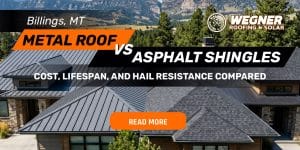
Metal Roof vs. Asphalt Shingles in Billings, MT: Cost, Lifespan, and Hail Resistance Compared
Table of Contents
Billings sits in one of Montana’s most hail-active corridors, with storms funneling through the Yellowstone Valley and targeting neighborhoods from the Heights to the West End every spring and summer.
When a 1.5-inch hailstone hits your roof at 60 mph, the material underneath determines whether you file an insurance claim or move on with your day.
In 2026, choosing between a metal roof vs. asphalt shingles is one of the most financially impactful decisions a Billings homeowner can make.
The fast answer on cost: asphalt shingles run $8,000–$14,000 installed on a typical Billings home.
Metal roofs cost $18,000–$35,000 but last 40–70 years versus 15–20 years for shingles. Your ownership timeline changes everything.
Metal Roof vs. Shingles Cost: What Billings Homeowners Actually Pay
Metal roof vs. shingles cost in 2026 breaks down by installed price per square foot:
- Asphalt shingles: $3.50–$6.50 per sq. ft. installed
- Standing seam metal roof: $9–$16 per sq. ft. installed
- Exposed fastener metal panels: $6–$10 per sq. ft. installed
The upfront gap is real, but the metal roof lifespan and shingles reshape the long-term math.
A homeowner looking for dependable roofing in Billings and staying for 40 years may replace asphalt twice, spending $16,000–$28,000 total, while a metal roof covers the same period.
Montana insurers offer premium discounts of 20–30% for qualifying Class 4-rated roofing systems, and the break-even point typically lands around 12–15 years post-installation.
Metal roof vs. asphalt shingles isn’t just a price comparison; it’s a timeline decision.
How Billings Hail Tests Every Roof Material
Yellowstone County records an average of 6–8 hail events per year, with storms regularly tracking through the Rimrocks corridor and hammering homes along King Avenue and Poly Drive.
Metal roof hail resistance vs. shingle durability isn’t theoretical here; it’s filed claims and repair receipts.
The performance breakdown for Billings hail impacts:
- Standard Architectural Shingles: Crack, bruise, and shed granules when struck by hail larger than 1 inch.
- Class 4 Impact-Resistant Shingles: Tested using the UL 2218 Standard, which involves dropping steel balls to simulate the kinetic energy of severe hail.
- Standing Seam Metal Panels: Flex on impact and typically sustain only cosmetic dents, whereas shingles suffer structural failure.
In a head-to-head Billings storm, the best roofing material for hail is standing seam metal, followed by Class 4 impact-resistant shingles as the strongest budget-friendly alternative.
Montana insurers offer premium discounts of 20–30% for qualifying Class 4-rated systems, acknowledging that these materials are often the difference between a minor inspection and navigating complex insurance claims.
Hail season doesn’t wait. Wegner Roofing & Solar offers free hail-readiness roof inspections across Billings, from the Heights to the South Side. Book yours before storm season hits at Wegner Roofing & Solar today.
Metal Roof Pros and Cons for Montana Homeowners
A straight look at metal roof pros and cons for Billings conditions:
Metal Roof Pros:
- Lifespan of 40–70 years vs. 15–20 years for asphalt shingles.
- Reflects solar heat, valuable across Billings’ approximately 168 clear days annually.
- Sheds snow efficiently, reducing structural load during heavy Montana winters.
- Qualifies for Class 4 ratings and Montana insurance premium discounts.
- Minimal maintenance requirements; simply follow a 2026 roof maintenance checklist to ensure peak performance.
Metal Roof Cons:
- The upfront cost is 2–3x higher than that of asphalt shingles.
- Requires certified installers; not every Billings roofing contractor installs standing-seam systems correctly.
- Montana’s 80°F+ seasonal temperature swings can loosen exposed fastener panels over time if improperly installed.
- Can be louder during rain and hail without a proper underlayment installed beneath the panels.
Asphalt Shingles Pros and Cons for Montana Homeowners
Here’s the honest breakdown of asphalt shingles for Billings-area homes:
Asphalt Shingles Pros:
- Lowest upfront cost at $3.50–$6.50 per sq. ft. installed, accessible for most budgets.
- Widely available through Billings contractors with fast installation turnaround.
- Class 4 impact-resistant shingles like Owens Corning Duration Storm and GAF Timberline HDZ RS qualify for Montana insurance discounts.
- Easier and cheaper to repair after storm damage, individual sections can be replaced without a full reroof.
- Strong curb appeal with a wide range of colors and styles available locally.
Asphalt Shingles Cons:
- Lifespan of only 15–20 years, most Billings homeowners face at least one full replacement.
- Standard asphalt shingles crack and lose granules under hail above 1 inch, a serious liability in Yellowstone County.
- UV degradation happens faster at Billings’ elevation of 3,123 feet, shortening the effective lifespan.
- Multiple replacements over 40 years cost $16,000–$28,000 total, exceeding most metal roof investments.
Your choice shouldn’t be based on a universal standard but on how well the material serves your specific 5-, 10-, or 30-year ownership horizon.
Not sure which system fits your timeline?
Wegner Roofing & Solar delivers honest, side-by-side cost breakdowns for metal and shingle roofing across Billings, no pressure, just real numbers built for Montana homes.
Visit Wegner Roofing & Solar in Billings to get started.
What's the Best Roofing Material for Billings Weather?
Three threats define Billings roofing performance: spring and summer hail, November–March snow loads, and high-altitude UV exposure.
At an elevation of 3,123 feet, Billings receives approximately 10% more UV radiation than sea-level locations, accelerating standard shingle degradation faster than manufacturer timelines predict.
The best roofing material for hail and Montana’s full seasonal threat profile:
- 1. Standing seam metal roofing:
top performer for hail resistance, snow shedding, and UV stability across 40–70 years.
- 2. Class 4 impact-resistant shingles:
best value option, with Owens Corning Duration Storm and GAF Timberline HDZ RS available through Billings-area contractors.
For homeowners staying 20+ years, the metal roof vs. asphalt shingles math strongly favors metal.
For those selling within 7–10 years, Class 4 impact-resistant shingles rated UL 2218 deliver stronger short-term ROI while still protecting against Billings storm seasons.

Key Takeaways
Metal roofs
cost $18,000–$35,000 installed and last 40–70 years in Billings.
Asphalt shingles
run $8,000–$14,000 and need full replacement every 15–20 years.
Class 4 impact-resistant shingles
offer serious hail protection at a significantly lower entry price.
Standing seam metal
leads in hail resistance, snow load performance, and UV durability.
Both materials qualify for 20–30% Montana insurance discounts with proper Class 4 ratings.
Don't Let the Next Hailstorm Make the Decision for You
When weighing metal against shingles, there is no single ‘correct’ choice that applies to every homeowner, but Billings’ weather tips the scales hard toward metal for long-term homeowners.
In 2026, with roofing material costs rising and Montana hail events tracking more frequently through the Yellowstone Valley, delaying this decision costs more than making the wrong one.
Whether you choose Class 4 impact-resistant shingles or a full standing seam metal roof, act before the next storm makes that choice for you.
Ready to protect your Billings home with a roof built for Montana’s toughest conditions?
Find Wegner Roofing & Solar in Billings, MT on Google Maps to see our service area and recent projects. Our certified crews install both metal roofing and impact-resistant shingle systems.
Reach out to Wegner Roofing & Solar today for a transparent, no-pressure estimate.

FAQs About Metal Roof vs. Asphalt Shingles in Billings, MT
Is a metal roof worth it in Montana?
In Montana, metal roofs are worth it for long-term homeowners.
They last 40–70 years, endure heavy snow, and earn 20–30% insurance discounts. While costlier upfront, they outlive multiple asphalt replacements, providing superior durability and significant long-term financial savings.
How much more does a metal roof cost than shingles?
In Billings, metal costs $10,000–$21,000 more than shingles upfront.
At $9–$16 per sq. ft., metal doubles asphalt’s price. However, Montana insurance discounts and avoiding future replacements mean homeowners typically break even within 12–15 years, making it a smart long-term investment.
Do metal roofs handle hail better than asphalt?
Yes, metal roofs significantly outperform asphalt in hailstorms. While shingles crack and lose granules, metal panels flex, sustaining only minor cosmetic dents.
Achieving Class 4 UL 2218 ratings, they provide the highest impact resistance available for Montana’s severe weather.
What roofing materials work best for Iowa weather?
Impact-resistant (Class 4) asphalt shingles and standing-seam metal roofs are the top performers for the DeWitt climate. These materials are specifically designed to withstand the heavy ice damming of January and the high-velocity winds that frequently sweep across Eastern Iowa.
Table of Contents
Categories
Latest Posts
October 5, 2026
Commercial solar panel installation is a major building project, not just an equipment purchase. Before asking for a quote, property owners should understand the roof’s
October 2, 2026
Get clear answers to “do home warranties cover solar panels” and learn what’s included, excluded, and how to check your solar system’s coverage options.
October 1, 2026
Get clear answers on insurance window replacement, including what’s covered, claim steps, and how to handle costs for damaged or broken windows.
September 30, 2026
Get clear answers on commercial roofing insurance, including coverage types, costs, and claims. Learn what contractors and property owners need to know.