Solar shingles cost depends on more than the solar material itself. The roof condition, system design, electrical work, installation details, and whether the project includes roof replacement all affect the scope. Comparing a written, itemized quote with a conventional solar-panel option can help you understand what you are paying for and what questions to ask.
Request a solar and roofing estimate
Key Takeaways
- Solar shingles combine a roof covering with solar-generating components, while conventional panels are mounted above a roof covering. The right comparison depends on the roof and the project goals.
- There is no reliable universal price for a solar-shingle project. Roof size and shape, tear-off, repairs, product selection, electrical scope, and local project requirements all matter.
- Ask whether the quote includes the complete roof assembly, solar equipment, electrical work, permitting, system commissioning, and cleanup—or lists exclusions separately.
- Compare the whole project and the written scope, not just a headline price or an estimated energy benefit.
- Confirm the exact product, installer responsibilities, warranty terms, and repair process before choosing a system.
What are solar shingles, and how do they differ from panels?
Solar shingles are roof-integrated photovoltaic products. They are designed to form part of the roof surface while generating electricity. Conventional solar panels, by contrast, are separate modules installed on a mounting system above the roofing material. Both approaches use sunlight to generate electricity, but they differ in how the roof and solar components are combined, installed, and serviced.
The distinction matters when comparing solar shingles cost with a panel estimate. A panel proposal may focus on the array and its attachment to a roof that remains in place. A shingle proposal can involve roofing work across a larger area, plus the electrical and solar portions of the project. A fair comparison needs to show whether each option includes the same roof work, energy system, and related equipment.
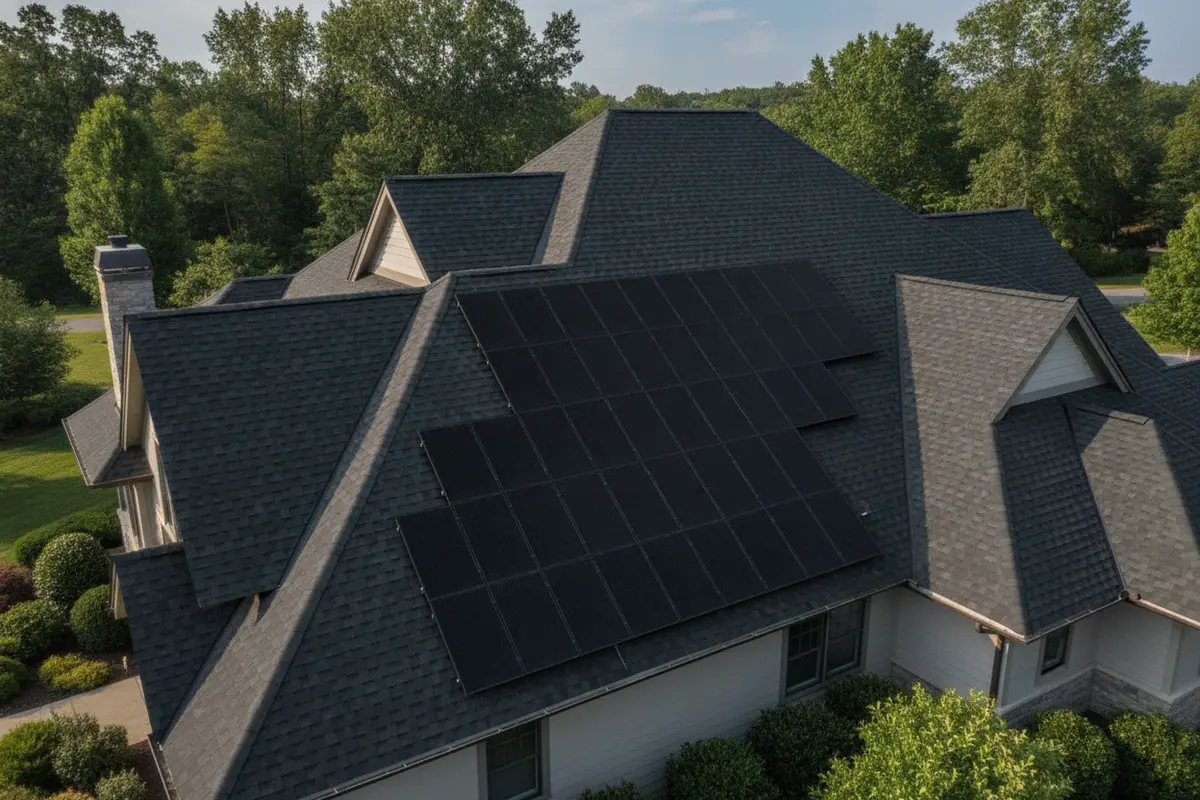
Solar shingles may appeal to owners who prefer a lower-profile roof appearance or who are planning roof work at the same time as a solar project. Appearance alone does not settle the decision. Product availability, roof suitability, system output, local approvals, installer experience with the specific product, and repair arrangements all deserve review. A roof-integrated product can have a different scope from one manufacturer or project to another, so ask for the exact product name and documentation.
Wegner Roofing & Solar presents roofing and solar as part of its exterior-services offering. That does not establish that every solar-shingle product is available for every home or service area. Ask whether the specific product under consideration is currently offered and appropriate for your project. The company’s solar information can be a starting point for a conversation, but the written scope should identify the actual system being proposed.
Why is there no single solar shingles cost?
A useful price is tied to a defined building, product, and installation plan. Two homes with similar floor area can have very different roof surface areas and shapes. One may have a simple, open roof in good condition; another may have several roof planes, penetrations, valleys, shading, or deteriorated materials that need attention. The solar equipment and the work needed to integrate it can also differ.
Online figures may describe a particular product, an assumed system size, or a project in a different region. They may leave out roof removal, repairs, electrical upgrades, permitting, storage, or other project items. Treat a general figure as an early planning reference only—not as a quote, a promised project price, or evidence that the same scope applies to your property.
The total should be understood as a project scope. That means identifying the work, the materials, the assumptions, the exclusions, and who is responsible for each part. If a quote does not explain those details, ask for clarification before comparing it with another proposal. A low number can be hard to evaluate if it leaves out work another contractor has included.
What parts of a solar-shingle quote affect the total?
Roof area, shape, and layout
The relevant measurement is the roof surface that may receive the system, not simply the home’s interior square footage. Roof pitch, the number of planes, hips and valleys, dormers, skylights, chimneys, vents, and other obstructions can affect measurement, layout, material use, and installation labor. A complicated roof may also limit where equipment can be placed or how a system is arranged.
Ask how the contractor measured the roof and how the proposed layout accounts for each roof plane. The proposal should make clear which surfaces receive solar shingles and which use conventional roofing materials, if the design combines them. It should also identify any areas left out and explain why. A design drawing or roof plan can make these assumptions easier to see than a single system-size figure.
Existing roof condition and removal work
The existing roof can change the project substantially. If the current covering is near the end of its useful service life, damaged, or not suitable for the planned installation, the proposal may include removal and replacement work. If the roof is sound and the product design allows another approach, the work may differ. Do not assume either outcome without an on-site assessment and product-specific installation requirements.
Ask whether the quote includes removal and disposal of old roofing, inspection of the exposed roof deck, replacement of damaged decking, underlayment, flashing, edge details, and the transition between solar and non-solar roof areas. A contractor cannot always know the full condition of concealed materials before work begins. The written proposal should explain how concealed damage will be documented, approved, and priced if it is found.
If a roof replacement is likely soon, compare the timing of roof work and solar work together. Installing a new system over a roof that needs replacement can lead to additional work later, including removal and reinstallation of solar components. That is a planning concern, not a prediction that every roof will need early replacement. A qualified evaluation can help determine whether the roof is ready for the proposed scope. Wegner’s pages on roof replacement timing and roof repair provide related background for discussing roof condition.
Product selection and system design
Solar-shingle products are not interchangeable simply because they are all described as shingles. Ask for the manufacturer, product line, specifications, layout, and expected system capacity used in the proposal. Check how much of the roof is solar-generating material and how much is a matching non-generating roof product. The distinction affects both the appearance and the project scope.
System design should reflect the actual roof, not a generic illustration. Orientation, shading, roof geometry, and the usable area affect how a system can be laid out. Ask the installer to identify design assumptions and explain how output estimates were developed. An estimate is not a guarantee of future electricity production, since actual results depend on site conditions, weather, system operation, and other factors.
Review whether the proposed system includes inverters, monitoring equipment, wiring, disconnects, and any other required electrical components. Ask whether equipment is integrated into the main system or priced as a separate option. If energy storage is offered, it should be clearly identified as an additional scope, with the equipment, installation, and any related electrical work described separately.
Labor, access, and installation details
Installation labor includes more than placing material on the roof. It can involve safe access, removing existing materials, preparing the roof, integrating the solar and roofing components, completing electrical work, coordinating inspections, and cleaning up. Steepness, height, access constraints, and the number of roof details can influence the work plan.
Ask how the contractor plans to protect the property during work, manage debris, and keep water out if installation spans more than one day. The scope should state what areas are included, what happens if weather delays the schedule, and how the crew will leave the roof at the end of each work period. Those points help you compare the installation approach rather than only the materials list.
Wegner’s roofing services information can help you frame questions about roofing work that may be part of a solar project. The project-specific proposal—not a general services page—should define the planned labor, materials, schedule, and responsibilities.
Electrical work, permits, and utility coordination
A solar installation may require electrical work and reviews or approvals that depend on the property and local rules. Existing electrical equipment, wiring routes, and the planned system can affect what is needed. Do not assume that permits, inspections, utility paperwork, or equipment updates are included just because a proposal describes a solar system.
Ask the contractor to list who prepares and submits required documents, who schedules inspections, and what steps remain before the system can be placed in service. Confirm whether any electrical upgrades are included, optional, or subject to evaluation. If a utility or authority has requirements relevant to the property, ask how those are being checked and when the project team expects to confirm them.
These details are part of comparing scope, not a reason to assume every home will need the same approval or upgrade. A clear proposal should distinguish known requirements from items that are still subject to review.
Optional equipment and project extras
Battery storage, backup capability, monitoring features, or other add-ons can change the overall project. They should be evaluated as their own choices, not quietly blended into a single total. Ask what each option does, what equipment is required, how it changes the design, and whether it has separate installation or electrical requirements.
Also ask whether the price includes taxes, delivery, disposal, temporary protection, and other project charges. The purpose is not to assume that every fee applies. It is to establish what is included and what may be added, so the final scope does not surprise you.
How can you compare solar shingles with conventional panels?
Start by comparing alternatives on the same property and with clear assumptions. One estimate might include roof replacement while another assumes the existing roof stays in place. One might include storage or electrical updates while another does not. Until those differences are visible, comparing bottom-line totals can produce a misleading result.
Use these questions to make the comparison more consistent:
- Is the roof work equivalent? Note whether removal, disposal, deck repairs, underlayment, flashing, and non-solar roofing are included.
- Is the system scope equivalent? Compare the proposed capacity, the usable roof area, product model, inverters, monitoring, wiring, and any storage.
- Are the assumptions visible? Check roof measurements, shading assumptions, system layout, and any site conditions that could change the scope.
- Who handles approvals? Identify responsibility for permits, inspections, utility coordination, and system commissioning.
- What does each warranty cover? Separate product, roof-work, and workmanship coverage, and review exclusions and claim procedures.
- How will future repairs be handled? Ask who diagnoses a leak or system issue and who coordinates roof and electrical work.
Solar shingles can offer an integrated roof appearance. Conventional panels can remain a separate layer above the roof covering. The aesthetic preference is personal, but the technical and financial comparison should still address roof readiness, product details, system design, installation, and future service. Do not assume that a more integrated appearance automatically means a lower total cost, higher energy production, or easier maintenance.
A proposal for a conventional panel system may also include roof work when the existing roof needs attention. Conversely, a solar-shingle proposal may use conventional roofing in areas that do not generate electricity. Ask each contractor to explain the full roof assembly and energy system. If both alternatives replace roofing, compare the same roofing area and quality assumptions where possible.
Walk through a sample comparison without relying on a headline number
Imagine that an owner is considering solar while the roof is approaching a planned replacement. The owner receives one proposal for panels and another for solar shingles. Rather than assuming that the lower total is the better deal, first mark what each proposal actually covers. Does the panel option include removal of the existing roof, new roofing beneath the array, and any later removal and reinstallation if the roof needs work? Does the shingle option cover the entire roof or only selected planes, and what material covers the remaining areas? Those answers may explain a large difference before the solar equipment is compared.
Next, compare the proposed energy systems separately from the roof work. Record the product model, system capacity, layout, inverter and monitoring equipment, and whether storage is included. If one proposal estimates a different amount of generation, ask for the assumptions behind the estimate, including roof orientation and shade. Do not treat a projection as guaranteed production or savings. The purpose is to understand whether the systems are being compared on similar terms, not to force unlike designs into an artificial match.
Finally, list unresolved items in a short column: concealed deck condition, permit responsibility, electrical upgrades, inspection coordination, warranty contacts, and service arrangements. Ask each contractor to respond in writing. If one item remains uncertain because it cannot be inspected before work starts, note the process for approving added work. This simple worksheet turns a general price contest into a decision about scope, product fit, responsibilities, and future service. It also helps an owner explain the tradeoff to another decision-maker without relying on a salesperson’s shorthand or a single promotional figure.
What should you check about the roof before getting a price?
A roof assessment helps turn a broad discussion into a realistic scope. Before requesting estimates, note the roof’s approximate age if known, any past repairs, visible leaks, recent storm damage, and planned remodeling that may affect the roof. Share these details, but do not treat a ground-level look as a substitute for a professional inspection.
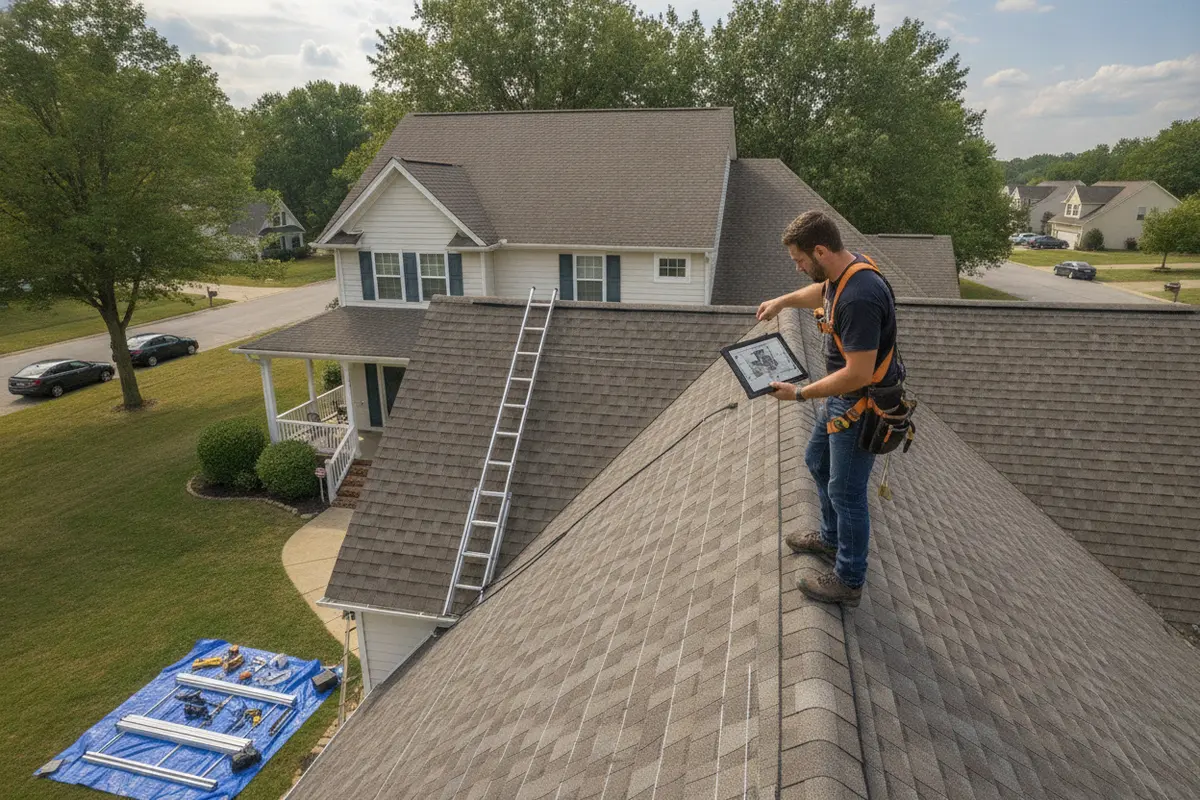
Ask the contractor to explain how the roof condition affects the solar-shingle recommendation. If parts of the roof need repair or replacement, ask which areas and why. If the inspection cannot confirm concealed conditions, ask how the proposal treats that uncertainty. A written scope should describe what is included now and how additional work would be approved if conditions change during construction.
Roof design also matters. A roof with many intersecting planes or penetrations may create layout constraints. Nearby trees or other shading may affect the suitable solar area. The contractor should explain what was observed and how the plan responds, rather than relying on a generic claim that every roof is suitable.
For roof questions beyond solar, Wegner’s roofing FAQs and roof inspection information offer related topics. The inspection page is location-specific; confirm the relevant service availability for your property rather than assuming that a page for one location establishes branch coverage everywhere.
What should an itemized solar-shingle quote include?
An itemized quote lets you see how the proposed project is constructed. It need not use one exact format, but it should be detailed enough to understand the work and compare it with another estimate. Look for a clear separation between roof work, solar equipment, electrical work, optional items, and exclusions.
- Property and roof description: Identify the project address, roof areas involved, measured scope, and any observed conditions that shape the design.
- Roofing scope: State what existing material will be removed, what new roof products will be installed, how solar and non-solar areas are handled, and what happens if concealed damage is found.
- Solar product and layout: Name the manufacturer and product, show the proposed layout, and describe the equipment included.
- Electrical scope: List wiring, inverters, monitoring, disconnects, and other included components, plus any upgrades that are excluded or not yet determined.
- Approvals and commissioning: Explain who handles permits, inspections, utility coordination, testing, and the steps required before operation.
- Price and payment schedule: Show the project total and how it is divided among included work, options, and any conditional items. Ask for written terms directly from the provider.
- Schedule and site logistics: Describe expected work stages, access needs, cleanup, and how delays or changes are communicated.
- Warranty and service information: Provide the applicable documents and explain how to request service for roofing, product, electrical, or workmanship concerns.
- Exclusions and change process: State what is not included, how unknown conditions are handled, and who must approve a change before additional work proceeds.
If the quote is a single bundled figure, ask for a scope breakdown. You do not need every labor hour itemized to understand the project, but you should be able to tell what the number buys. A written scope also reduces the risk of comparing a complete installation with an estimate that leaves important items unresolved.
Wegner’s past project examples can help you understand the kinds of roofing and exterior work the company shares publicly. A project photo is not a substitute for product documentation or a written estimate for your property, and an example should not be taken as a guarantee of the same design or result.
How should you think about long-term value?
Long-term value is not the same as an estimated payback period. It depends on the project price, system performance, electricity use, utility arrangements, maintenance, equipment life, roof service needs, and the assumptions used in any financial model. Those factors can vary, and a forecast is not a guarantee of savings or future utility rates.
If a proposal includes an energy or financial estimate, ask what assumptions were used. The estimate should identify the modeled system output, shading and orientation assumptions, electricity usage, utility rates or other inputs, and any incentives or rules considered. Ask what is excluded and whether a change in those assumptions would materially change the estimate.
Do not rely on an advertised benefit without reading its conditions and checking that it applies to your property and project. Eligibility for an incentive, utility program, or other benefit can depend on current rules and individual circumstances. A contractor’s estimate should not be treated as legal, tax, or utility advice; verify applicable terms with the relevant program or qualified adviser.
Also consider how roof repairs could affect the system over time. Ask whether roof and solar components can be serviced separately, what must be removed to access a repair area, and which party coordinates that work. The answer depends on the product, roof design, contract, and warranty. It is better to ask before installation than to assume the roofing and electrical responsibilities will automatically be handled by one party later.
What warranty and repair questions matter?
There may be several warranties rather than one all-purpose promise. A product warranty, a power or performance warranty, a roofing-material warranty, and a workmanship warranty can cover different things. Read the actual documents for duration, exclusions, maintenance obligations, transfer terms, and how to submit a claim. Do not infer coverage from a brief statement in a sales conversation.
Ask who is responsible if a roof leak appears near a solar-shingle area, if a solar component stops working, or if a repair requires access beneath the system. Request the service contact and the steps for identifying whether the issue involves roofing, product, electrical work, or more than one part of the project. Clarify whether removal and reinstallation, shipping, labor, or diagnostic visits are covered or excluded.
Confirm who performs the work and who remains your point of contact if the original installer or product provider changes. The written agreement should identify the responsible parties and explain the route for warranty questions. Where different contractors handle roof and electrical scopes, clarify how they coordinate and what happens if the cause of a problem is disputed.
Warranties can be valuable, but they are not a substitute for a complete installation scope or a practical service plan. Compare the documents themselves, not just a phrase such as long-term coverage. If a term is unclear, ask for it in writing before authorizing the project.
How can property owners prepare for an estimate?
A little preparation can make a site visit more useful. Gather any information you have about roof age, previous replacement or repair work, known leaks, electrical upgrades, and past solar evaluations. You do not need to know every technical detail. Sharing what is known helps the contractor identify questions for the assessment.
Decide what matters most to you: the roof’s appearance, the timing of roof replacement, energy production, storage, a particular product, or comparing options. A clear priority helps the estimator explain tradeoffs. If the primary goal is an integrated look, say so. If you are mainly trying to understand whether solar can be combined with needed roof work, make that clear instead.
During the conversation, ask the contractor to separate confirmed observations from assumptions. Ask what needs additional evaluation and when a final scope can be established. Take time to read the written proposal. A free estimate, if offered for the project, is an estimate and does not mean the repair or installation itself is free. The final cost depends on the agreed, written scope.
Before signing, check that the address and project details are correct, the product is identified, exclusions are visible, and the payment and change terms are understandable. Keep the proposal and supporting product documents together. If you compare multiple contractors, ask each for comparable information and make a note of any remaining differences.
What is a practical way to decide?
Use a short sequence instead of choosing from a headline number:
- Confirm the roof is a suitable starting point. Get a roof assessment and identify needed repairs or replacement work.
- Define the solar goal. Decide whether appearance, energy production, roof timing, storage, or another factor is most important.
- Request comparable designs. Ask for solar-shingle and conventional-panel options where available and appropriate, with the same assumptions about roof work and equipment.
- Read each scope line by line. Check roof materials, electrical work, approvals, options, exclusions, schedule, and change terms.
- Review service and warranty details. Understand who will address roof and system issues after installation.
- Choose based on the complete project. Weigh the written scope, product fit, appearance, service plan, and cost rather than assuming one option is best for every property.
This process does not guarantee that both system types will be available or suitable. It does help you get a more useful answer to the question of solar shingles cost: what work is included, what the project depends on, and how the proposed roof and solar system fit your building.
How can commercial property owners evaluate the scope?
Commercial roofs introduce additional planning questions. A property may have multiple roof sections, equipment on the roof, access requirements, occupied business hours, and operational needs that differ from a home. The size of a building alone does not determine whether solar shingles are a fit. Roof structure, roof condition, the proposed product’s application, and project logistics all need to be evaluated for the specific site.
Ask for a site-specific design that identifies which roof areas are included and how existing equipment, drains, walkways, and maintenance access are considered. Confirm whether the system layout preserves access for building maintenance and whether any roof areas are excluded. If the property has more than one building or roof section, the estimate should identify what each portion covers rather than blending separate scopes without explanation.
Commercial owners should also discuss how work will be coordinated with occupants and normal operations. Ask about staging, material delivery, access controls, noise, protection of the building, and how the contractor will communicate planned work areas. If the building is occupied, clarify how access to entrances, loading areas, or business operations may be affected. Those logistics can influence the project plan even if they do not change the product itself.
For a commercial roof, the proposal should distinguish roof-system responsibilities from solar-system responsibilities, especially when separate teams or subcontractors perform different work. Confirm who coordinates inspections and approvals, who communicates with the property manager, and who provides system documentation after completion. A clear responsibility chart or written scope can prevent gaps between roofing and electrical work.
Commercial energy use and decision-making may also involve more than one stakeholder. Owners, tenants, property managers, and finance teams may have different questions. Identify who will review the design, who approves scope changes, and who receives maintenance or monitoring information. If a financial estimate is supplied, make sure the assumptions match the building’s actual use and are reviewed by the appropriate advisers. Do not treat a generalized savings model as a guaranteed outcome.
Wegner describes commercial roofing and solar among its service areas. The specific fit and availability of a solar-shingle product for a commercial building should be confirmed directly. A commercial roofing conversation can help owners address roof scope, while a project proposal should state whether solar shingles are an available option for that building.
What are common quote-comparison mistakes?
One frequent mistake is comparing project totals without checking whether the scopes match. A quote that excludes removal or roof repairs may look lower than a complete roof-integrated proposal. Another may include electrical work, monitoring, or permit coordination that the other estimate leaves undefined. The remedy is to compare inclusions and exclusions line by line, then ask for clarification on differences.
A second mistake is treating an energy estimate as a fixed financial result. The projected output and possible value depend on assumptions about the system, site, electricity use, utility arrangements, and future conditions. Ask for the model inputs and keep them separate from the construction price. A project price is a contractual scope; a performance or savings estimate is a forecast with assumptions.
A third mistake is overlooking who will handle service. A quote may describe equipment and installation in detail but say little about future roof access, troubleshooting, or warranty claims. Ask how the provider coordinates a roofing issue with a solar-equipment issue. Find out what documents and contacts you will receive when the work is complete.
Also avoid assuming that the most detailed-looking proposal is automatically the best fit. The product and design must suit the building, the roof must be evaluated, and the installer’s responsibilities must be clear. A longer proposal can still omit a crucial item. Focus on whether you can explain the work, the assumptions, and the exclusions in plain language.
Finally, do not compare an estimate for solar shingles with a panel quote that uses a different roof condition or system goal. If one proposal assumes a roof replacement and another assumes the roof remains, request alternate scopes or make the difference explicit. If storage or other equipment appears in only one proposal, compare it separately. The goal is not to force every option into identical form; it is to understand exactly why they differ.
Frequently asked questions about solar shingles cost
Are solar shingles more expensive than conventional solar panels?
There is no dependable answer for every property. The comparison changes with the roof condition, product, system size, amount of roofing replaced, labor, electrical work, and the scope included in each estimate. Compare proposals for the same home and make sure both include equivalent roof and solar work before deciding.
Can solar shingles be installed on an existing roof?
That depends on the specific product and the condition and design of the roof. Some projects may require removal or replacement of existing roofing, while the appropriate approach must be confirmed against the manufacturer’s installation requirements and a property assessment. Ask the contractor to explain the roof preparation and replacement scope in writing.
Do solar shingles replace the entire roof?
Not necessarily. A project may use solar-generating shingles on selected roof areas and compatible non-solar roofing elsewhere, depending on the design and product. Ask which surfaces are included, what material will cover the remaining areas, and how the transition between them is built.
Can I compare solar-shingle quotes by price per square foot?
That measure alone can hide important differences. It may not show system capacity, electrical equipment, roof tear-off, repairs, permits, optional storage, or service terms. Use the written scope and system design to compare the complete project rather than relying on one simplified unit price.
Does an estimate guarantee my final project cost or energy savings?
No. An estimate is based on stated assumptions and the scope known at the time. The agreement should explain how concealed conditions or approved changes are handled. Energy projections are also estimates, not guaranteed savings or production. Review the assumptions, exclusions, and written terms carefully.
Get a project-specific answer
The best way to understand solar shingles cost is to connect the roof condition, product, system design, and installation scope in one written proposal. Ask for the details behind the total, compare equivalent options, and confirm which products and services are available for your property. Wegner Roofing & Solar can discuss the roofing and solar questions involved in your project.
Contact Wegner to discuss your roof and solar options
A careful comparison gives you a clearer basis for deciding whether an integrated solar roof or a separate panel system fits your building and priorities.
