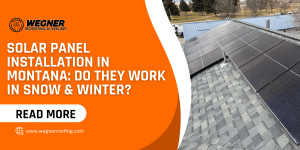
How Solar Panels Perform in Snow and Cold
Many people mistakenly believe solar energy requires hot, sunny days. The truth is that solar panels need sunlight, not heat, to generate electricity.
In fact, cold temperatures can actually improve panel efficiency because extreme heat tends to reduce energy output.
Properly installed panels can generate significant energy even on cold, bright days.
Here’s how winter solar works in real life:
- Light, Not Heat: Solar panels continue to work as long as sunlight reaches them.
- The Albedo Effect: White snow reflects sunlight, which can actually help more light reach the panel surface.
- Shedding Design: Panels are installed at a tilt that allows snow to slide off naturally.
- Self-Clearing: Dark panel surfaces absorb heat from the sun, which accelerates snow melt.
This means that solar panel installation in Billings isn’t just possible in winter; it can still produce meaningful energy.
Does Snow Block Solar Production?
It’s true that heavy snowfall can temporarily reduce output. However, snow rarely stays on panels for long.
Because of the panel’s angle and dark finish, snow slides off or melts relatively quickly in sunlight, even in cold weather.
If you ever see snow covering panels for a day or two, it’s normal, but don’t worry: once the panels are exposed again, your system resumes generating electricity.
How Much Energy Can You Expect in Winter?
Solar production differs throughout the year, and winter days typically have fewer daylight hours. But two key points help keep energy generation strong:
- Montana still gets plenty of sunny winter days, which means solar panels can generate energy even in cold weather.
- Solar systems are sized to meet your annual energy profile, not just summer peaks.
In other words, while winter production might be lower than summer, your solar panel installation is designed to average output across the year to deliver the savings you expect.
Ready to See Winter Solar in Action? Find out how much energy a solar system can generate for your Billings home, even in snow.
Contact us at Wegner Roofing & Solar for a free customized evaluation.
Exclusive Incentives & Why Homeowners Choose Wegner
While the solar landscape shifts, we have created exclusive programs to ensure switching to renewable energy remains a financial win for Montana homeowners.
- Huge Cash Back Programs: We believe in immediate ROI. Our exclusive cash-back offers put money directly back in your pocket upon installation, giving you financial flexibility right from the start.
- No Money Down, No Out-of-Pocket: Protect your savings. Our zero-down programs allow you to transition to solar without any upfront costs, effectively swapping a rising utility bill for a stable, cleaner energy solution.
The Wegner Difference
We pair these aggressive financial offers with a commitment to quality that many competitors overlook.
While other companies may obscure details or use generic components, Wegner Roofing & Solar guarantees total transparency regarding your system’s performance and warranties.
We utilize only top-tier equipment engineered to handle Montana’s heavy snow loads and temperature swings.
When you choose us, you are partnering with a vetted team of experts dedicated to clear communication and building a relationship that lasts as long as your roof.
Winter Solar Works: What You Need to Know
Solar energy works in snowy climates like Billings, MT, sometimes better than people expect.
Snow doesn’t permanently stop production, and most systems resume normal output as soon as the panels are exposed to sunlight again.
Cold weather can boost efficiency, and reflected winter light often enhances production. The bottom line: a well‑designed solar panel installation delivers value year‑round.
Don’t wait until spring to start saving energy and reducing your utility bill. Wegner Roofing & Solar can design a solar system that works even in Montana’s snowy winters.
Reach out to us and let us help you get started on your solar journey today!
FAQs About Solar Panel Installation in Snowy Climates
Do solar panels work when snow is on them?
Yes. Snow often slides off panels quickly or melts, and even light snow cover still allows some sunlight through, so generation continues.
Will snow damage my solar panels or roof?
No. Panels are built to withstand snow loads and winter weather.
As long as you have handled your basic winter roof preparation in Billings, our expert installation ensures your roof remains secure.
How does net metering benefit my solar array?
Net metering credits excess energy back to your utility account at full retail rates, helping reduce your overall energy cost during other months.
Are there still federal tax credits for solar in 2026?
No. Residential federal tax credits for solar installations expired at the end of 2025, so homeowners installing in 2026 and beyond can no longer claim that credit on their taxes.
Is winter installation a good idea?
Absolutely. You can still install solar in winter and start generating energy sooner, often with faster scheduling and immediate net metering benefits.