Metal Roof Installation for Bozeman Homes: A Durable Solution
Providing excellent quality and service since 2011.
The Ultimate Guide to Metal Roof Installation in Bozeman, MT
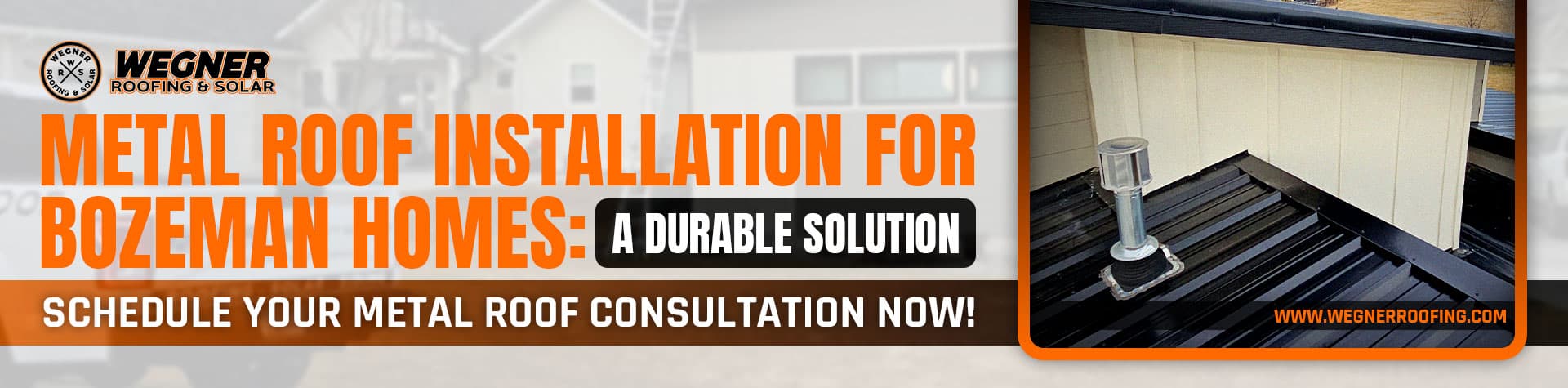
Upgrading your home’s exterior is a monumental decision, and opting for a professional metal roof installation is one of the most structurally and financially impactful investments you can make for a property in the Gallatin Valley. Not only does a new roofing system instantly elevate your home’s curb appeal, but it also provides unmatched, long-term defense against Montana’s notoriously unpredictable and severe weather systems.
Whether you are in the planning stages of building a custom mountain home or you are looking to replace a failing, aging asphalt shingle roof, upgrading to premium metal ensures decades of structural protection, minimal ongoing maintenance, and drastically improved energy efficiency.
At Wegner Roofing & Solar, our team combines top-tier manufacturing materials with hyper-local installation expertise. We understand exactly what it takes to protect residential and commercial properties in Bozeman. In this comprehensive guide, we will break down the technical specifications, environmental benefits, material options, and financial considerations of upgrading to a steel or aluminum roofing system.
Start enhancing your home with a durable, energy-efficient roof by contacting Wegner Roofing and Solar today and discover why metal roof installation is the best choice for your Bozeman home!
Why Bozeman’s Unique Climate Demands Resilient Roofing Materials
Bozeman presents a unique set of challenges for exterior building materials. The combination of high altitude, intense ultraviolet (UV) radiation, heavy winter snowpack, and rapid freeze-thaw cycles creates an environment that rapidly accelerates the deterioration of traditional asphalt roofs.
The Threat of Freeze-Thaw Cycles and Ice Dams One of the primary causes of roof failure in Montana is the freeze-thaw cycle. Winter heat escaping from a home’s attic melts roof snow, which runs down to the colder eaves and refreezes, creating ice dams. Water pools behind these dams and backs up underneath traditional shingles, leaking into your home. Metal roofs naturally mitigate this risk. Their slick, continuous surface allows snow and ice to shed easily before dangerous ice dams form. Furthermore, metal panels are impermeable and feature interlocking seams, providing a superior watertight seal.
High-Altitude UV Exposure and Thermal Shock At nearly 5,000 feet, Bozeman’s intense UV exposure dries out asphalt shingles, causing them to crack and lose protective granules. Premium metal roofing, coated with high-quality finishes, is entirely immune to UV degradation and won’t warp or blister. Additionally, Montana’s massive 40-to-50-degree daily temperature swings cause rapid expansion and contraction, known as thermal shock. At Wegner Roofing and Solar, our experienced Bozeman roofing contractors install premium metal systems with specialized clips and hidden fasteners, allowing the panels to naturally “float” and safely expand over the roof deck without compromising structural integrity or weatherproofing.
Types of Metal Roofing Systems Available in Montana
When discussing metal roof installation, it is crucial to understand that “metal roofing” is a broad category encompassing several different styles, profiles, and installation methods. Choosing the right profile depends on your aesthetic preferences, your budget, and the architectural style of your home.
Standing Seam Metal Roofing (Hidden Fastener Systems)
Standing seam is widely considered the gold standard for residential and commercial metal roofing in Bozeman MT especially in heavy-snow regions. In a standing seam system, broad, flat metal panels run vertically from the roof’s ridge down to the eaves. The edges of these panels are folded up (the “standing seam”) and locked together.
The critical advantage of standing seam is its concealed fastener design. The screws used to attach the panels to the roof deck are completely hidden beneath the interlocking seams. Because the fasteners are not exposed to the sun, rain, or snow, they cannot rust, back out, or create entry points for water. Standing seam systems also utilize floating clips that accommodate the thermal expansion and contraction mentioned earlier.

Corrugated and Ribbed Metal Roofing (Exposed Fastener Systems)
Exposed fastener panels, often corrugated or ribbed, are what many people picture when they think of agricultural or industrial metal roofs, though they have become popular in modern residential architecture. These panels overlap at the edges and are secured by driving screws directly through the metal faces into the roof deck.
While exposed fastener systems are generally more affordable due to easier manufacturing and faster installation, they require more roof maintenance. The rubber washers on the exposed screws will eventually degrade under UV light and must be inspected and replaced every 10 to 15 years to prevent leaks.
Stamped Metal Shingles and Tiles
For homeowners who want the unparalleled longevity of metal but prefer the traditional aesthetic of architectural shingles, clay tiles, or cedar shakes, stamped metal roofing is an excellent alternative. These metal panels are stamped to mimic conventional profiles but are significantly lighter, fire-resistant, and far more durable than the materials they imitate.
Deep Dive into Materials: Steel, Aluminum, and Protective Coatings
The performance of your roof is not just determined by the panel profile, but by the metallurgy of the base material and the chemical composition of its protective coating.
Galvalume vs. Galvanized Steel
The vast majority of residential metal roofs are made from steel. To prevent the steel core from rusting, it must be coated in a protective alloy.
- Galvanized Steel: Coated entirely in zinc. While effective, it can eventually succumb to red rust if the zinc layer is compromised.
- Galvalume Steel: Coated in an alloy of zinc, aluminum, and silicon. Galvalume is highly preferred in the roofing industry because the aluminum provides an exceptional barrier against corrosion, while the zinc offers “sacrificial” protection at cut edges or scratches. Galvalume consistently outlasts traditional galvanized steel in residential applications.
The Role of Aluminum Roofing
Aluminum is a premium option that is naturally resistant to rust and corrosion. Because aluminum does not contain iron, it physically cannot rust, making it an excellent choice for properties that face extreme moisture. Aluminum is also highly malleable, making it ideal for complex roof designs, though it is slightly more prone to denting from severe hail than heavy-gauge steel.
High-Performance Paint Systems: PVDF (Kynar 500)
A metal roof is only as good as its finish. High-end metal roofs are treated with Polyvinylidene Fluoride (PVDF) resin-based coatings, commonly known by the brand name Kynar 500. This highly specialized, chalk- and fade-resistant architectural coating ensures that a dark bronze or matte black roof will retain its vibrant color for decades, despite constant UV bombardment.
Furthermore, according to research by the authoritative U.S. Department of Energy (Cool Roofs), these advanced coatings contain highly reflective pigments that bounce a significant portion of solar radiation back into the atmosphere, massively reducing your home’s cooling load during the hot Bozeman summers.
The Complete Metal Roof Installation Process
A flawless installation is the difference between a roof that lasts a lifetime and one that leaks during the first spring thaw. The process requires highly skilled labor, precision engineering, and a strict adherence to local building codes.
Step 1: Comprehensive Structural Inspection
Before any materials are ordered, a thorough inspection of the existing roof structure is mandatory. The decking (the wooden boards beneath the roofing material) must be structurally sound and capable of supporting the new system.
Step 2: Tear-Off vs. Metal Roof Overlay
Can you install a new metal roof directly over old asphalt shingles? In some specific scenarios, yes. A metal roof overlay can save significant labor and disposal costs. However, this is only viable if the underlying decking is completely free of rot, the old shingles are relatively flat, and the total weight does not exceed local building code limits.
More often than not, a complete tear-off is recommended to allow the installation crew to inspect and repair the decking. If you are unsure about the condition of your current system, read our detailed guide outlining the 5 Signs You Need a Roof Replacement in Bozeman to understand the warning signs of a failing roof.
Step 3: Advanced Underlayment Application
Once the deck is prepped, a high-quality underlayment must be applied. For metal roofs, standard asphalt felt paper is insufficient. Because metal conducts heat, traditional felt can bake and stick to the bottom of the panels. Instead, a premium synthetic underlayment is required. Additionally, in Bozeman, high-temperature ice and water shield membranes must be applied to the eaves, valleys, and all roof penetrations to provide a secondary, waterproof barrier against ice damming.
Step 4: Edge Metal, Flashing, and Panel Installation
Custom-fabricated drip edges, gable trims, and valley flashings are installed first to direct water away from the fascia boards. Following this, the metal panels are meticulously aligned, cut, and locked into place. Special care is taken around chimneys, skylights, and plumbing vents, utilizing custom-fit pipe boots and Z-closures to guarantee a watertight seal.
True Costs: Analyzing the Investment in Bozeman
We believe in complete pricing transparency. While the initial investment for a metal roof is higher than asphalt, analyzing the lifecycle cost reveals massive long-term savings. An asphalt roof in Montana typically fails every 15 to 20 years, whereas a premium metal roof easily lasts 50 to 70 years.
Here are the average estimated costs for metal roof installation in the Bozeman area:
- Standing Seam (Hidden Fastener): $10 to $16 per square foot
- Corrugated Metal (Exposed Fastener): $7 to $12 per square foot
- Stamped Metal Shingles: $8 to $12 per square foot
(Note: Exact pricing depends on your roof’s complexity, steel gauge, and whether a tear-off is required).
During the lifespan of one metal system, you avoid paying for three separate asphalt replacements. Factoring in utility savings, minimal maintenance, and potential insurance discounts for hail and fire resistance, metal roofing delivers the highest ROI of any exterior upgrade.
Ready to upgrade your home’s defense? Trust the leading roofing contractors in Bozeman at Wegner Roofing & Solar. Visit our local office at 26 Pipkin Wy, Belgrade, MT 59714, United States or call us today to book your expert metal roof installation!
Our Belgrade location isn’t just an office address — it’s where our metal roofing crews stage materials, coordinate Gallatin County projects, and respond to emergency calls across the valley. Belgrade homeowners choosing between standing seam, corrugated, or stamped metal shingles benefit from the same hyper-local installation expertise we bring to every Bozeman project, with the added advantage of zero travel time. For a complete overview of our residential and commercial roofing services in Belgrade, including storm damage roof repair, roof inspections, and solar-ready installations, visit our Belgrade roofing page.
Seamless Integration with Solar Power Systems
As energy costs continue to rise, many Bozeman homeowners are turning to renewable energy to power their properties. This is where standing seam metal roofs offer an unparalleled, hidden advantage.
If you have a traditional asphalt roof, installing solar panels requires contractors to drill dozens of lag bolts directly through your shingles and into your roof deck. Every penetration is a potential future leak point.
With a standing seam metal roof, specialized clamps (known as S-5! clamps) are used to attach the solar racking system directly to the raised vertical seams of the roof. There are absolutely zero penetrations made to the roof deck. This integration preserves your roof’s warranty, eliminates the risk of water intrusion, and creates a beautifully modern aesthetic.
If you are considering future-proofing your home by combining these two powerful upgrades, explore our comprehensive services regarding solar panel installation in Bozeman, MT.
Managing Snow: The Importance of Snow Retention Systems
One critical factor unique to mountain towns is snow management. Because metal is incredibly slick, heavy accumulations of snow can suddenly avalanche off the roof in large sheets. This can damage landscaping, tear off gutters, and pose a serious safety hazard to people walking below.
To mitigate this, a proper metal roof installation in Bozeman must include a snow retention system. These systems come in two primary forms:
- Snow Guards (Cleats): Individual, staggered brackets that help break up the snow and hold it in place so it can melt gradually.
- Snow Rails/Fences: Continuous horizontal bars installed near the eaves that hold back large sheets of snow, highly recommended for steep-slope roofs. Like solar panels, snow retention systems can be clamped directly to the standing seams without penetrating the roof.
Routine Maintenance for Decades of Protection
One of the greatest benefits of metal is its low-maintenance nature. It will not harbor moss, algae, or mold like asphalt or wood shakes do. However, “low maintenance” does not mean “no maintenance.” To maximize the lifespan of your roof, follow these simple steps:
- Visual Inspections: Twice a year, safely observe your roof from the ground to ensure branches or debris have not accumulated in the valleys.
- Gutter Clearing: Ensure your gutters and downspouts are completely free of pine needles and leaves before the winter snows arrive, ensuring proper water drainage.
- Check Sealants: While the metal will last a lifetime, the specialized caulking and sealants around pipe boots and chimneys may degrade over a 15-to-20-year period and should be inspected by professionals.
Secure Your Home with a Professional Metal Roof Installation
Installing a metal roof is a highly specialized trade. It requires precise tools, sheet metal brakes, and crews trained specifically in metal dynamics—not just shingle layers who occasionally nail down panels. For a flawless metal roof installation, choosing a contractor who intimately understands local building codes, structural loads, and regional weather patterns is critical.
As the premier Bozeman roofing contractors, Wegner Roofing & Solar is committed to elevating the standard of home protection in the Gallatin Valley. We do not cut corners, we never use substandard underlayments, and we stand firmly by our craftsmanship.
If you are ready to invest in the ultimate protection for your property, review our past projects and client testimonials on our About Us page, and reach out to our team today to schedule your comprehensive roof evaluation. Let us help you secure your home’s future with a roofing system built to conquer Montana’s toughest elements.