Solar panels on a metal roof can be a practical combination, but the right installation depends on the roof profile, its condition, the attachment plan, and how the complete roof-and-solar system will be maintained. Before comparing equipment or scheduling work, property owners should understand how those decisions fit together.
Talk with Wegner about your roof and solar project
Key Takeaways
- Metal roofs are not all alike. Standing-seam panels and exposed-fastener panels call for different attachment discussions.
- A project should start with the existing roof’s age, condition, profile, and available installation documentation—not with a one-size-fits-all mounting assumption.
- Mounting, flashing, wiring routes, drainage, wind and snow conditions, and access for future roof work should be considered as a connected system.
- Solar equipment does not resolve underlying roof problems. Repairs or roof work may need to happen before panels are installed.
- Ask for a written scope that explains the proposed attachment, roof penetrations if any, responsibility for weatherproofing, and how service or removal would be handled.
Can solar panels work on a metal roof?
In many cases, yes. A metal roof can support a solar installation when the roof system, structural capacity, mounting equipment, and installation details are suitable for the specific building. The word “metal” alone does not tell you whether a proposed system is appropriate. A standing-seam roof, a corrugated panel, and an exposed-fastener roof have different shapes and fastening details. Even two roofs that look similar from the ground may have different panel dimensions, support conditions, or installation histories.
The project has two related but distinct questions. First, can the roof and building support the planned equipment and loads? Second, can the mounting and wiring be installed in a way that fits the actual roof system and leaves a clear plan for water management and future service? A qualified project review should address both before work begins.
It also helps to treat the roof as part of the solar project rather than as a surface that simply holds panels. Roof condition, seams, fasteners, flashings, drainage paths, and penetrations all affect how the finished assembly will perform and be maintained. A careful design conversation can reveal issues that are easy to overlook when attention is focused only on panel layout.
Wegner Roofing & Solar presents roofing and solar as connected services. Owners can review its solar installation information and roofing services as starting points, then confirm the proposed approach for their roof and property. A web page cannot substitute for examining the individual roof.
Why does the metal roof profile matter?
Metal roofing describes several types of roof assemblies, not one universal surface. The visible profile helps identify the kind of questions a project team needs to resolve. It does not, by itself, establish the panel’s manufacturer, thickness, support spacing, condition, or the correct mounting hardware. Those details should be confirmed from project records or a site review where possible.
Standing-seam panels
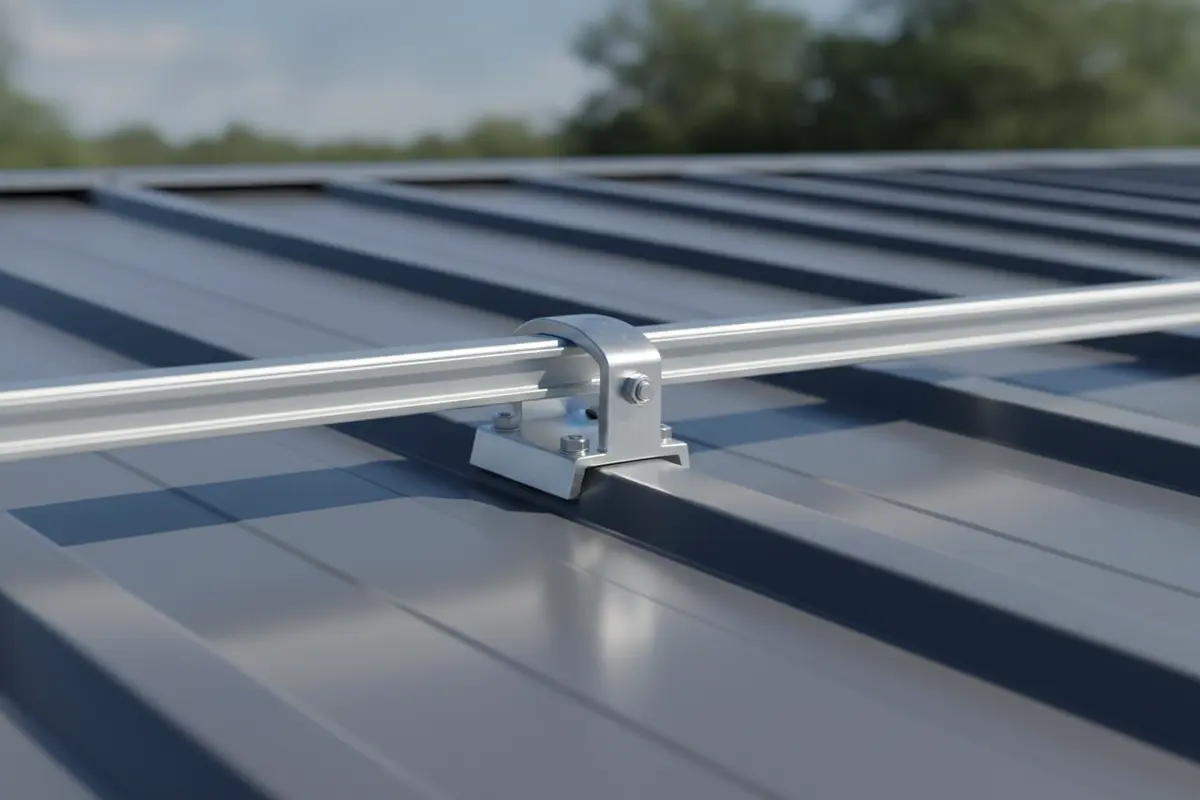
Standing-seam roofs have raised seams where adjacent panels connect. Some solar mounting systems are designed to attach to compatible seams with clamps, avoiding a new hole through the panel. That can be an attractive design consideration, but “clamp-on” is not a blanket approval for every standing-seam roof. Clamp compatibility depends on the seam shape and dimensions, the roof system, the selected attachment, and the manufacturer’s installation requirements.
Ask the installer to identify the roof profile and show how the proposed clamp is intended to engage it. The plan should make clear how attachment points are positioned, how the array’s loads are transferred, and how the installation avoids damaging or distorting the seam. A clamp that appears to fit is not enough evidence that it is suitable for that particular roof assembly. The exact equipment and installation instructions matter.
Exposed-fastener panels
Exposed-fastener panels use visible screws or fasteners through the panel surface. Mounting options may use existing structural attachment points or introduce penetrations, depending on the roof design and approved system. The project team should explain which approach is proposed, where attachments will go, and how the detail is intended to keep water out over time.
Fasteners and washers are part of a weather-exposed assembly. Their condition and placement matter, as do the panel and supporting structure beneath them. Do not assume an existing screw can simply be reused as an anchor for solar equipment. The project needs a documented attachment design that fits the actual roof and equipment, with a clear plan for sealing any new penetrations.
Corrugated and other profiles
Corrugated, ribbed, and other formed metal panels vary in shape and support. A mounting detail designed for one profile may not fit another. It is important to identify where the roof is supported and how the proposed equipment connects to the roof or structure. Avoid relying on a generic description such as “metal-roof mount” without confirming the exact roof configuration.
If the building has additions, patched areas, or roof sections replaced at different times, the profile or condition may vary from one part of the roof to another. That can influence where an array can be placed and which details need closer review. A site-specific layout is more useful than assuming the entire roof is uniform.
How should the mounting approach be evaluated?
Start by asking for a plain-language description of the attachment method. Is it designed for the identified standing seam? Does it connect through the panel? Does it use existing attachment points, new fasteners, or another structural connection? The answer should be specific enough that you can understand the proposed path from the solar equipment to the roof structure.
Then ask what documentation supports the selection. The installer should be able to identify the mounting components and explain how their instructions apply to the roof profile on your building. When the design depends on panel dimensions, seam geometry, support spacing, or other installation details, those details should be checked rather than assumed.
Mounting is also a load question. Solar panels, rails, and attachments add weight and create forces that the roof and supporting structure must accommodate. The roof’s visible surface cannot reveal every structural detail. The project should account for the applicable design conditions for the building, including local wind and snow exposure, with structural review when the scope calls for it. Do not accept a broad assurance based only on the fact that a roof is metal.
Ask how the planned array layout, attachment spacing, and edge locations relate to the design. The answer may depend on building-specific information and the equipment selected; it should not be guessed from a rule of thumb in an online article. When the property is commercial or has a large, unusual, or older roof, coordination among the solar designer, roofing professional, and appropriate structural reviewer may be especially useful.
Finally, ask who is responsible for confirming each part of the assembly. The proposal should distinguish the solar equipment and mounting scope from roof repairs or modifications, and it should state who will complete and inspect roof-related details. Clear responsibility helps avoid a situation where a concern is noticed but each party assumes someone else owns the resolution.
What should you know about penetrations and flashing?
A mounting plan that avoids new penetrations may be possible on some compatible standing-seam roofs. Other systems may need attachments that pass through the roof surface. Neither description alone decides whether a design is appropriate. The important point is that every proposed attachment must fit the roof system and have a documented installation detail.
For any penetration, ask how the opening will be flashed or sealed, what components are part of that detail, and how the detail works with the roof panel’s movement and water-shedding design. The response should address the actual roof and mounting system, not just say that a sealant will be applied. Materials have different roles, and sealant alone should not be treated as a substitute for a compatible, properly installed flashing or attachment detail.
Ask whether the roof manufacturer or original project documents specify installation conditions that apply to attachments or modifications. If records are unavailable, note that uncertainty and ask how the project team will verify a suitable approach. Do not assume a modification has no effect on existing product coverage, installation obligations, or maintenance requirements. Confirm those terms with the relevant parties before work starts.
Water does not always travel straight down the roof. It follows the roof’s slope, seams, valleys, transitions, and drainage paths. Array placement and attachment details should not obstruct drainage or direct water into a vulnerable joint. A good review considers the whole roof plane and the details around the array—not only the point where a bolt or clamp meets a panel.
Keep a record of what was installed. The project file should identify the attachment products and locations, include relevant installation and inspection documentation, and explain how to contact the responsible parties if a roof concern arises. If a later repair is needed, those records can help a roofer understand the array and avoid unnecessary guesswork.
Should you replace or repair the roof before adding solar?
Solar panels can remain on a roof for many years, so the roof’s remaining service life is an important planning question. If a roof is near the end of its useful life, has recurring leaks, or needs significant repairs, installing panels first could mean paying for removal and reinstallation to complete roof work later. There is no universal age at which every metal roof should be replaced; condition and system details matter more than age alone.
Before signing a solar agreement, ask for a roof-condition review. Look for known leaks, corrosion, loose or damaged panels, deteriorated sealants, failed or backed-out fasteners, damaged flashing, and signs of movement or past patching. These observations do not all mean the roof must be replaced. They are reasons to understand the issue, determine what work is needed, and decide whether it should be handled before solar installation.
Do not let the panel layout conceal an unresolved roof question. If a repair is recommended, ask what area is affected, what the repair would address, and whether the work needs to happen before mounting equipment. For a larger project, compare the sequence and scope of roof work with the solar plan. A written, scope-specific quote is the right basis for discussing project costs; a general online range cannot account for the building’s materials, condition, access, or design.
Wegner’s roof repair information and project examples may help owners prepare questions about roofing work. Confirm which services and project details apply to your location and property. If the roof needs replacement, coordinate the roof selection and solar design before the new roof work is complete, rather than treating solar as a separate decision made after the fact.
How should roofing and solar work be coordinated?
Roofing and solar work are easier to plan when the parties agree on sequence, scope, and handoffs before the first crew arrives. If the roof needs repair or replacement, determine whether that work should be completed first and what information the solar designer needs from the finished roof. If the roof is staying in place, decide who will document its condition and confirm that the proposed attachment fits.
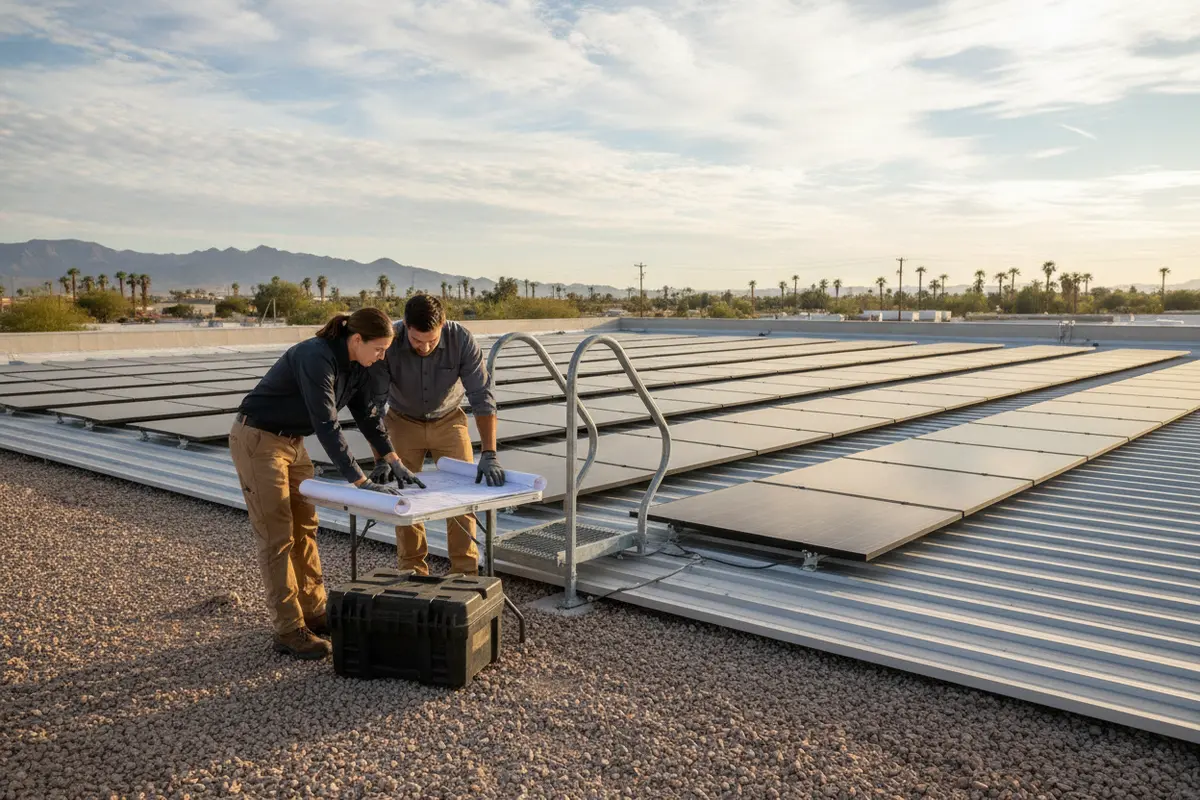
Discuss the array layout early enough for the roofing and solar plans to be checked together. Roofers need to know where equipment, attachments, and wiring are expected to appear. Solar installers need to understand seams, roof transitions, drainage, and areas requiring access. If each team works from a different plan, an otherwise avoidable conflict may show up during installation.
Agree on who is responsible for roof-related penetrations, flashing, repair of installation damage, and inspection of the completed work. Also clarify who to contact if a leak or other concern appears after installation. The answer should be written into the project scope or handoff documentation, not left as a verbal assumption between crews.
Scheduling matters as well. Weather, material delivery, access restrictions, and the availability of the relevant trades may affect the sequence. For commercial properties, account for building operations, tenant access, equipment on the roof, and any need to keep particular areas clear. Build enough time into the plan for required reviews and corrections instead of assuming each step can happen on the same day.
Owners can use Wegner’s service-area information to check the states and places its website lists, then confirm current project availability and scope directly. A listed service area does not by itself establish local office capacity or the suitability of a particular roof design. The project conversation should be specific to the building.
What roof conditions deserve attention before installation?
A pre-installation review should record the condition of the roof and the areas that could be affected by the planned work. The objective is not to diagnose every issue from the ground; it is to identify information the project team should verify before covering portions of the roof or adding equipment.
- Leaks and water stains: Note active drips, interior staining, damp insulation, or a history of recurring leaks. Identify whether the source is known and whether repairs have been completed.
- Corrosion or damaged panels: Ask whether rust, deformation, loose edges, or impact damage affects the proposed array area or nearby roof sections.
- Fasteners and sealants: Record visible loose or missing screws, worn washers, cracked sealant, or prior patching. A professional should determine whether these observations call for repair.
- Roof transitions: Review valleys, ridges, edges, curbs, skylights, vents, and other penetrations that may affect array placement, drainage, or service access.
- Interior evidence: Check accessible attic or ceiling areas for past or current moisture signs. Interior evidence can help focus a roof inspection, though it may not identify the exact source.
- Past work and records: Gather installation documents, repair invoices, product details, and any information about modifications or remaining coverage terms.
Take dated photographs from safe, accessible locations and keep notes about when a concern appeared or returned. Do not climb onto a wet, steep, fragile, or otherwise unsafe roof to collect pictures. A roof inspection by a qualified professional can help clarify observations that cannot be safely or reliably assessed from the ground.
One useful question is whether any roof issue is located within, beside, or upslope from the intended array. Its relevance depends on the roof layout and water movement; the goal is to make the designer aware of it. A small detail can influence equipment placement or the order of work, so it is better to raise concerns early.
How do weather, drainage, and location affect planning?
Local conditions are part of a building-specific design, not a reason to apply a single generic mounting recipe. Wind exposure, snow loads, roof slope, surrounding terrain, and building height can all affect design choices. The responsible project team should determine which conditions and requirements apply at the property and account for them in the system design.
Snow and ice are especially relevant to roof access and array placement in areas that experience winter weather. Panels may change how snow lies or releases from a roof surface. Owners should ask whether the proposed layout considers safe access, likely snow movement, and nearby doors, walkways, or equipment. Do not assume that panels will prevent snow or ice from accumulating, or that a particular layout removes all related hazards.
Similarly, confirm that water can drain along its intended paths around the array and roof details. Avoid placing equipment in a way that blocks an outlet, concentrates water at a seam, or makes routine inspection unnecessarily difficult. Roof drainage may be less obvious on a complex building with multiple roof planes or additions, so include the relevant transitions in the design review.
Properties in Wegner’s regional footprint may have different weather and building conditions. Its service-area page lists coverage across several states, but project design and availability should be confirmed for the specific property. Local context helps frame the questions; it does not replace site-specific design, structural review where needed, or the installation requirements for the selected equipment.
What maintenance access should the layout preserve?
A finished solar array should not make it impossible to inspect or service the roof. Before approving the layout, ask how a person will reach roof features that may need attention, including vents, drains, skylights, flashing, valleys, and equipment. The answer may vary by roof shape, local requirements, and array design, so do not rely on a universal clearance number from a general article.
Think about the work that could be needed during the life of both systems. A roofer may need to inspect a seam, replace a panel, repair flashing, or address a leak near an array. A solar technician may need access to wiring or equipment. The plans should account for how those tasks could be performed, what needs to be disconnected or removed, and who coordinates that work.
Ask whether the proposal describes the process for temporary panel removal and reinstallation if future roof work requires it. Clarify who would arrange that work, what the relevant agreement says about responsibility and costs, and how the roof will be protected during removal. Those arrangements can vary by project and contract. It is better to understand them before installation than to discover a gap years later.
Keep a file with the final array layout, wiring route, mounting details, equipment information, project contacts, inspection notes, and roof records. Share relevant updates with future contractors. If the roof is repaired or modified later, tell the contractor that solar equipment is present and provide the installation documentation.
What should you ask before choosing an installer?
Look for clear answers about the roof itself, not only the panel equipment. A useful conversation should make it possible to understand what has been assessed, what remains uncertain, and which party is responsible for resolving open questions. Consider asking:
- How did you identify the roof type, profile, and condition?
- Which attachment method is proposed for this exact roof, and what documentation confirms compatibility?
- Will the installation require new roof penetrations? If so, how are they detailed, flashed, and inspected?
- How will the design account for the building’s support structure and applicable local wind or snow conditions?
- Are repairs or roof replacement advisable before solar work? What observations support that recommendation?
- How will the array affect drainage, access to roof features, and future roof maintenance?
- Who handles roof-related installation details, damage, or a concern discovered after the work?
- What records will I receive, including the final layout, attachment information, and service contacts?
- If a roof repair is needed later, how will panel removal and reinstallation be coordinated?
Pay attention to whether the answers are specific to your roof. “We install on metal roofs” does not explain whether the proposed attachment works with your panel profile. A useful answer connects the method to the roof, identifies supporting information, and explains how unanswered questions will be checked before installation.
Also review the written scope. It should distinguish solar equipment and electrical work from roof repairs, specify assumptions about roof condition, and describe who owns the weatherproofing details. Compare like with like when reviewing proposals. Different layouts, attachment methods, repair allowances, and responsibilities may make two totals represent different projects.
What happens during a careful project review?
A clear process usually begins with information gathering. The owner can provide roof records, past repair history, interior leak observations, and any known restrictions on access. The project team can then inspect the relevant areas, identify the roof system, and determine what additional documentation or review is needed before settling on an array layout.
Next, the proposed solar design and roof details should be considered together. That includes panel placement, attachment locations, wiring routes, drainage, access, and any roof work that should happen first. When questions remain about the structure, compatibility, or a product requirement, the project team should resolve them before installation rather than treating an assumption as a final design.
Before work begins, confirm the scope and sequence in writing. The documents should identify what is included, what is excluded, who performs the roof-related details, and what records will be provided at completion. If a condition is discovered during installation, agree on how work will pause or proceed while the issue is assessed and documented.
After installation, review the completed work and collect the closeout information. Keep final layout and attachment documentation, equipment details, inspection records, and contact information together with the roof’s maintenance history. These records can help the owner, roofer, and solar service provider make informed decisions in the future.
What are common planning mistakes to avoid?
Choosing a mount before identifying the roof. A product category is not proof of fit. Confirm the roof profile and selected attachment’s compatibility before treating a mounting method as settled.
Assuming every metal roof avoids penetrations. Some compatible designs may use seam clamps, while other roof systems or project conditions may call for a different detail. Ask what is proposed for this building and how it is documented.
Installing over unresolved roof concerns. A leak or damaged panel does not automatically mean the entire roof must be replaced, but it deserves assessment. Decide what repair, if any, is needed before covering the area with equipment.
Leaving responsibilities vague. If the contract does not say who handles penetrations, flashing, repairs, and future removal, ask for clarification. Verbal assurances are harder to use when different parties are involved later.
Ignoring service access. A layout should be reviewed for access to drainage features, roof transitions, and equipment. Future maintenance is part of planning, not an afterthought.
Comparing proposals by price alone. First check whether each proposal assumes the same roof condition, attachment method, repair work, design scope, and responsibility for roof details. A lower total may omit work another proposal includes. Request a written, scope-specific quote and compare the documented scope.
How can you prepare for a roof-and-solar conversation?
Owners do not need to arrive with every technical answer. A few practical details can make the first discussion more productive:
- Note the roof’s approximate installation date, if known, and collect any product or contractor records.
- Write down leak history, prior repairs, and any visible concerns, including where and when they appeared.
- Take photographs from the ground or another safe location. Do not walk on the roof unless a qualified person has confirmed that access is safe.
- Identify roof features that may affect layout, such as vents, chimneys, skylights, roof transitions, and nearby trees or structures.
- Ask whether the project team needs measurements, building plans, utility information, or other records to evaluate the proposed system.
- List your priorities: expected timing, preserving access, coordinating with planned roof work, or understanding future repair responsibilities.
- Request that unanswered technical questions and proposed next steps be recorded before you approve a final scope.
For owners in Montana, North Dakota, South Dakota, Iowa, or Tennessee, confirm that the specific property is within current project availability. Wegner describes its multi-state service footprint, but a general service-area listing is not a guarantee of office capacity, project timing, or a particular system’s suitability. A direct conversation can establish what information is needed for your address and roof.
Request a conversation about your roof and solar plans
Frequently asked questions
Do solar panels have to be attached through a metal roof?
Not always. Some systems may attach to compatible standing seams without a new opening through the panel, while other roof profiles and project designs may require a different attachment method. The roof profile and equipment documentation determine what is suitable; do not assume that every metal roof can use the same approach.
Will solar panels damage a metal roof?
A properly selected and installed system should be designed for the specific roof, but no general statement can guarantee the outcome for every building. Ask how the attachment protects the roof, how penetrations are detailed if needed, and who is responsible for correcting installation-related concerns. A review of the roof’s existing condition is also important.
Should I repair a leak before installing solar panels?
Yes, have a known leak assessed before installation. The source should be identified and the appropriate repair plan determined before equipment covers or limits access to that area. A leak does not automatically mean the whole roof needs replacement, but it should not be ignored.
Can panels be removed later for roof repairs?
Removal and reinstallation may be possible, but the process, responsibility, timing, and cost depend on the system and project agreements. Ask about this before installation and keep the final layout and equipment records. The scope should make clear who coordinates the solar and roofing work if a future repair requires access beneath the array.
How do I know whether my roof is suitable?
A roof-specific review is needed. It should consider the metal profile, roof condition, attachment compatibility, building structure, local design conditions, and maintenance access. The result may be that the roof is suitable as it stands, that repairs or more information are needed, or that the project plan should change. A professional assessment is more reliable than judging suitability from a photograph alone.
The best starting point is a coordinated review of the roof and the proposed solar system. When the attachment, roof condition, project responsibilities, and future access are clear before work begins, property owners can make a better-informed decision about the next step.
